
The current global financial environment is significantly shaped by the Federal Reserve's monetary policy, leading central banks worldwide to diligently observe and adjust to its actions. The US dollar has recently shown remarkable strength, consistently outperforming major currencies like the Australian dollar, British pound, and Japanese yen. This dollar appreciation is rooted in several developments: a surprising contraction in Australia's job market prompted a recalculation of interest rate expectations for the Reserve Bank of Australia (RBA), while the British pound softened after UK inflation rates fell below the Bank of England's (BoE) forecasts. Simultaneously, the Bank of Japan (BoJ) has adopted a cautious stance, with its governor signaling a willingness to parallel the Fed's tightening efforts. This collective scenario underscores a market where the Federal Reserve's assertive approach to combating inflation continues to steer global monetary trends. Reinforced by recent Federal Open Market Committee (FOMC) minutes, which highlighted deep concerns over persistent inflation and the need for resolute measures, the dollar's sustained dominance appears likely. This intricate interplay necessitates careful strategic planning by central banks globally as they navigate these powerful external forces impacting their domestic economies.
Details of International Monetary Shifts
In the dynamic realm of international finance, central banking institutions across various nations are meticulously tracking the Federal Reserve's evolving monetary policy. The American dollar has recently emerged as a formidable global currency, consistently outperforming its major counterparts, including the Australian dollar (AUD), British pound (GBP), and Japanese yen (JPY).
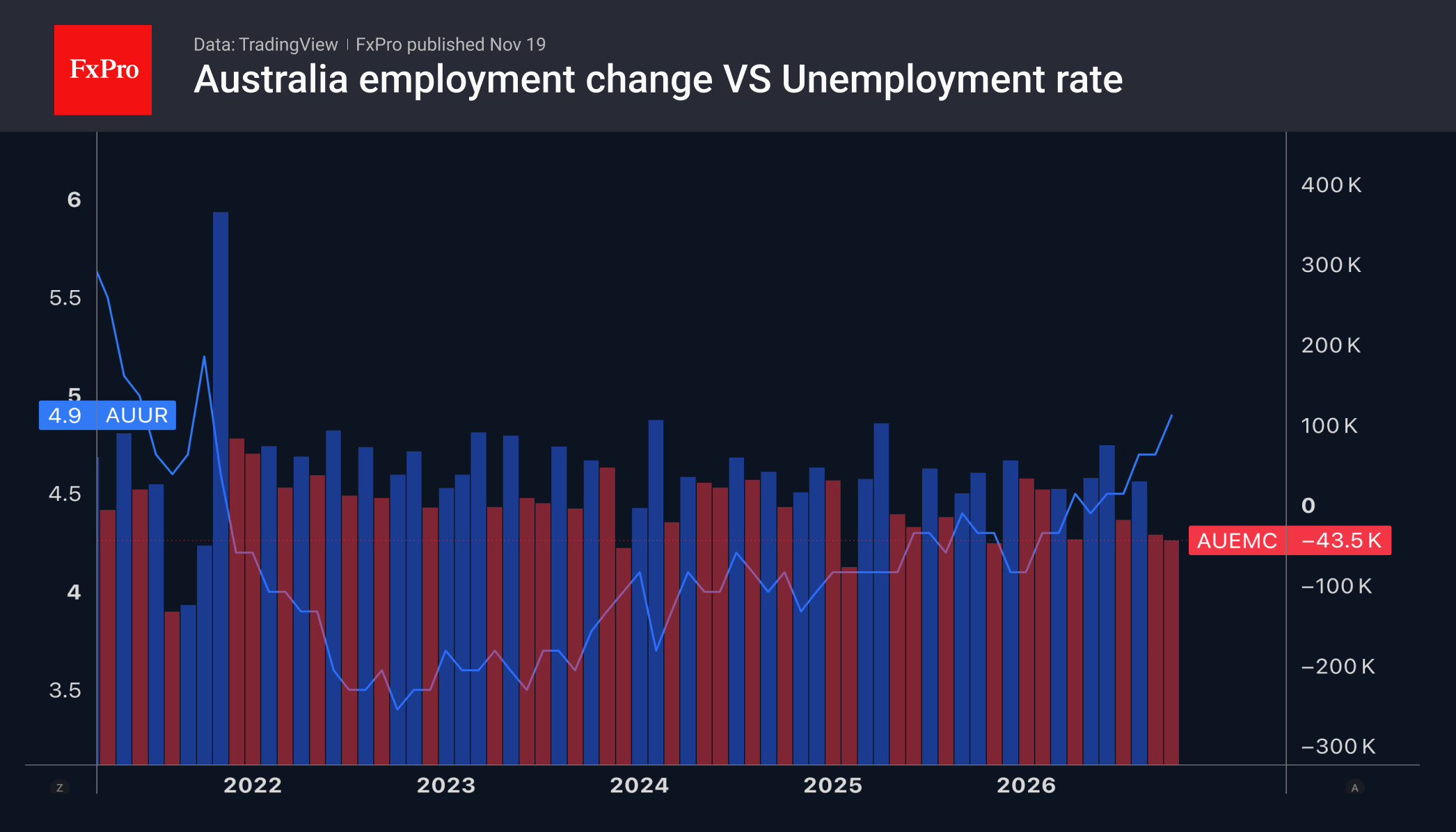
Specifically, the Australian dollar experienced a significant downturn following an unexpected and concerning report from its labor market. This report disclosed a considerable reduction of 43,500 jobs, accompanied by a corresponding rise in the national unemployment rate to 4.9%. These figures triggered an immediate sell-off in the AUDUSD pair, driving it to its lowest valuation since the previous December, settling at 0.6661. This sharp depreciation, representing a 5.5% loss since late October, has dramatically altered market expectations for the Reserve Bank of Australia. Financial futures now indicate a 40% probability of a 25-basis-point interest rate cut by the RBA by May. This contrasts sharply with the projected 85-basis-point increase in the US federal funds rate by the close of 2027. This fundamental divergence in policy outlooks has undeniably shaped the AUDUSD's trajectory, establishing a clear selling trend since September, with previous attempts to breach the 200-day moving average failing to gain traction.
Concurrently, the British pound has also faced headwinds, with the GBPUSD pair sliding to 1.3120, marking its weakest point since November 2025. This depreciation was largely influenced by updated market assessments of UK inflation, which settled at 3.6%, marginally below the 3.7% forecast by the Bank of England and financial analysts. As a direct consequence, the derivatives market has adjusted its expectations for a future BoE base rate hike in 2027, now anticipating an 80-basis-point increase, a reduction from the earlier 90-basis-point prediction, which has further weighed on the sterling's value.
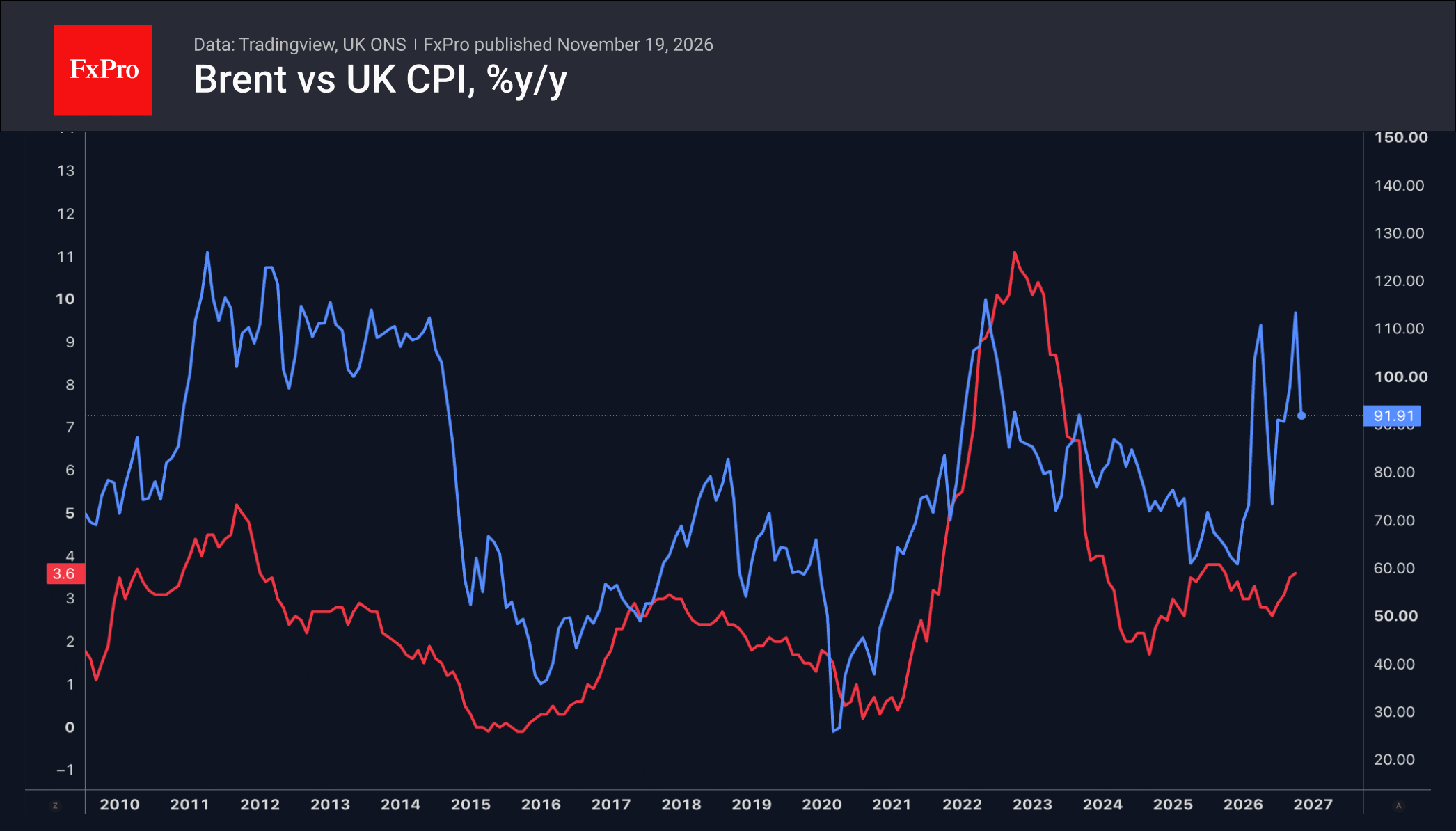
Despite the persistent hawkish pronouncements from BoE Governor Andrew Bailey, who linked the ongoing conflict in the Middle East to potential needs for higher British interest rates due to rising energy prices affecting core inflation, the pound found little respite. While Governor Bailey's strong rhetoric is a familiar aspect of the central bank's communication, a significant 21% decline in Brent crude prices since its peak in October has somewhat mitigated the immediate necessity for a more aggressive monetary tightening by the BoE.
In the Asian markets, the Japanese yen has also experienced struggles, even as Bank of Japan Governor Kazuo Ueda delivered assertive remarks. Ueda articulated his commitment to closely monitoring the broader trend of monetary tightening instigated by the Federal Reserve. He emphasized the profound impact of interest rate fluctuations on exchange rates and domestic inflation through their influence on inflation expectations, reaffirming the BoJ's dedication to vigilance and a continued path towards monetary tightening.
Governor Ueda's address was widely interpreted as an implicit pledge to align the BoJ's future policy with that of the Fed. However, market speculators appeared to focus predominantly on his acknowledgement of the substantial interest rate differentials between the two economies, which subsequently propelled the USDJPY pair higher.
Further bolstering the US dollar's strength were the minutes from the October Federal Open Market Committee (FOMC) meeting. These documents revealed a collective and pronounced apprehension among officials regarding persistent inflationary pressures. The committee called for more decisive hawkish signals concerning future interest rate adjustments, issuing a stern warning that any hesitation could worsen the situation, eventually necessitating even more rigorous policy responses.
Market Outlook and Key Considerations
The prevailing market consensus suggests that the US dollar's robust performance is set to endure, primarily as long as the Federal Reserve maintains a more assertive and proactive monetary stance compared to other major central banks. This implies that the Australian dollar, British pound, and Japanese yen are likely to continue experiencing relative weakness against the greenback in the foreseeable future.
For discerning investors, critical technical and psychological thresholds warrant close observation. A sustained recovery of the AUDUSD pair above the 0.6840–0.6880 range, or the GBPUSD breaking above 1.3250, would signal a potential shift in momentum, as these zones previously functioned as strong support levels. Conversely, for the USDJPY pair, a decisive decline below the 157 mark would indicate an unwinding of its recent upward trajectory.
Looking ahead, key economic data releases will provide further market direction. Investors should particularly note Japan's upcoming retail sales figures, anticipated on November 19 at 23:30 GMT, and the United Kingdom's retail sales data, scheduled for November 20 at 07:00 GMT. These indicators will offer valuable insights into consumer spending and economic health in these respective regions, potentially influencing currency valuations.
The Interconnected Threads of Global Monetary Policy
This intricate web of financial events vividly illustrates the deep interdependence of global financial markets and the unparalleled influence exerted by the Federal Reserve. It serves as a compelling case study of monetary policy spillovers, where the decisions, and even the carefully chosen words, of a leading central bank can send significant ripples across economies worldwide. The continuous adjustment by the Reserve Bank of Australia, the Bank of England, and the Bank of Japan in response to the Fed's stance highlights that central banks do not operate in isolated silos. Their actions, whether proactive or reactive, form a complex dance aimed at preserving economic stability and managing currency valuations amidst a constantly shifting global landscape. For policymakers and market participants alike, this situation underscores the critical need for acute foresight, adaptive strategies, and sophisticated risk assessment to navigate the powerful external forces that continually shape domestic economic policies.