
Hobbies that come with supplies—yarn, sketchbooks, tiny bottles of paint, sheets of plastic sprue—have a way of expanding to fill whatever space they are given. In a small rental, that can feel like a problem with no solution: no spare room, no garage, no basement, and a lease that rules out major renovations. But you do not need a dedicated studio to keep making things. You need a system that keeps one project moving, packs itself up quickly, and stays out of the way of the people you live with.
The approach below is less about buying clever products than about making a few deliberate choices. Start with what you are actually working on, give it a home that can travel, and treat the shared rooms of your apartment as shared rooms first and workspaces second.
Choose one active project
The single most effective space-saving decision is to work on one thing at a time. It sounds restrictive, but most hobby supplies multiply because several projects sit half-finished at once: a sweater in progress, a sketchbook you started in spring, a model you set aside when a part needed sanding. Each one drags along its own tools, references, and leftovers.
Pick the project you are genuinely excited about right now and put the rest into storage—not thrown away, just out of the active rotation. Keep the current project's materials together in one container so that starting a session does not begin with a search. When you finish or lose interest, swap in a new project from storage. The rule is not “only one hobby forever”; it is “one active workspace at a time.”
This also makes it easier to be honest about what you own. If a project has been in storage for a year and you feel no pull to return to it, that is useful information. Letting go of supplies you are not using is not a failure; it is how you keep the space you have.
Build a portable kit
A portable kit is the difference between a hobby that happens and a hobby that waits for a free weekend. The idea is to gather everything needed for a typical session into one bag or box that can be picked up, opened, and put away without a dedicated room.
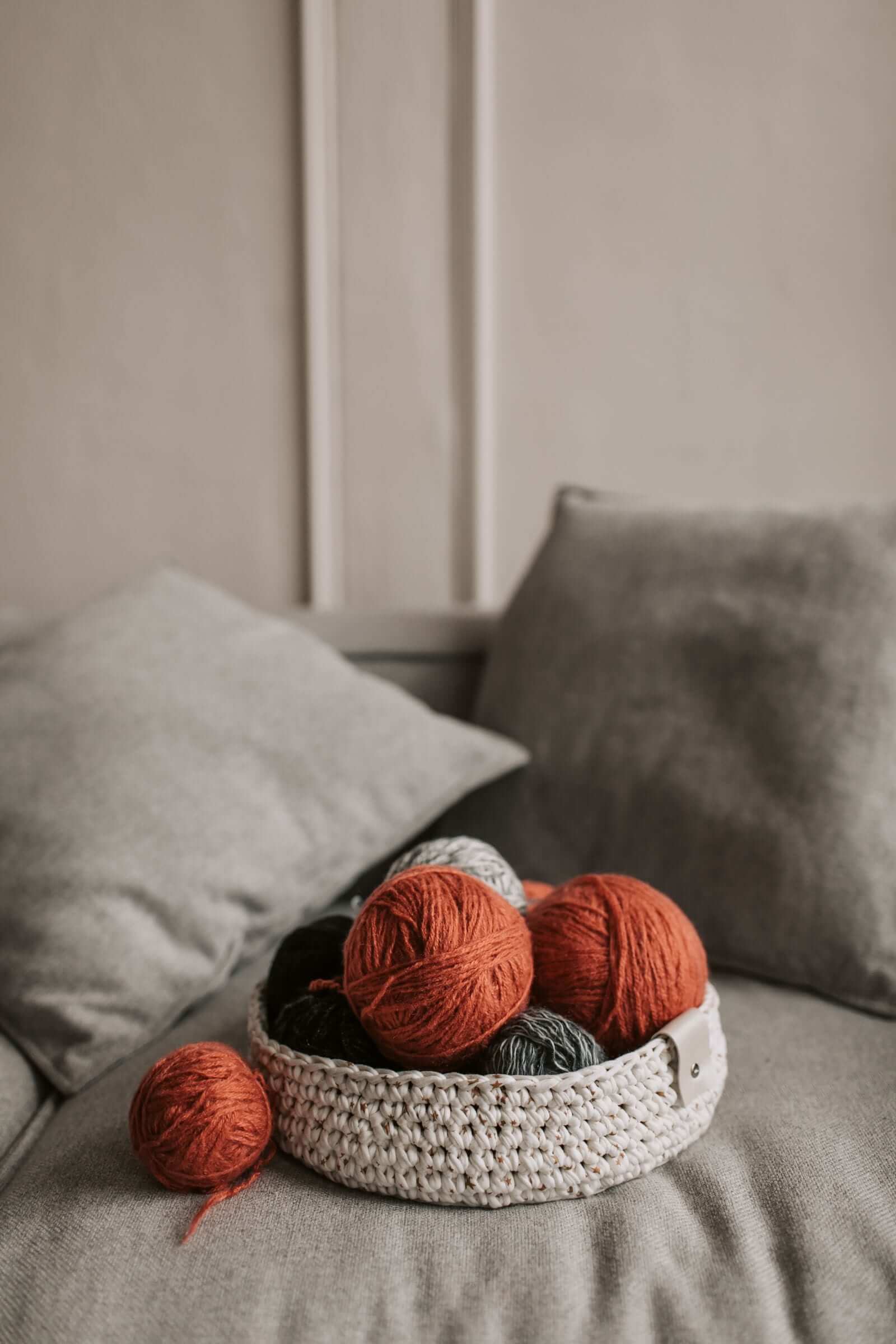
For knitting, that might be a project bag with the current yarn, the pattern, the needles you are using, a small pair of scissors, and a few stitch markers. For sketching, a pencil case, a small sharpener, an eraser, and one sketchbook—not the whole drawer of paper. For model-building, a shallow box with the sprues for the current build, a hobby knife, sanding sticks, glue, and a small cutting mat.
The kit should be small enough to carry with one hand and to set down on a table without taking over the whole surface. Resist the urge to include “just in case” items; duplicates and extras are what turn a kit back into a stash. If you need something rarely, keep it in the main storage box and fetch it when required.
Use a folding table
Many small apartments have no room for a permanent desk or worktable. A folding table solves this without asking you to give up a wall. Look for one that folds flat enough to slide behind a sofa, under a bed, or into a closet, and that is stable enough to lean on while you work.
Set it up only when you are working, and take it down when you are done. This sounds like a chore, but it takes less than a minute and it prevents the table from becoming a permanent clutter magnet. A folding table also lets you choose your spot: near a window for sketching in daylight, in the living room for a podcast while you knit, or in the kitchen for a model build with good ventilation.
If a full table is too much, a folding lap tray or a sturdy board across your knees can work for knitting and sketching. The principle is the same: a defined work surface that appears for a session and disappears afterward.

Store supplies so they hide easily
Storage in a small apartment works best when it is boring, uniform, and easy to put away. Mismatched bins and open shelves invite clutter; matching containers that slide into a closet or under a bed do not.
Think in layers. The active kit stays accessible—on a shelf, in a basket, or in a tote by the sofa. The backup supplies live in closed containers in less convenient places: under the bed, on the top shelf of a closet, or in a storage ottoman. Label the containers so you can find things without unpacking everything, and keep like with like: yarn with yarn, paper with paper, tools with tools.
Clear containers can help you see what you have, but in a shared living space, opaque boxes often look calmer. Either way, the goal is that the supplies have a known home and that putting them away is faster than leaving them out. If a container is awkward to open or too heavy to move, it will not get used, and the system will collapse.
Protect the shared living space
A small apartment is rarely yours alone, even if you live by yourself—guests, roommates, and partners all use the same rooms. Hobby work has a way of spreading: paint fumes, fiber dust, sharp tools, and half-finished projects on the coffee table. A few habits keep the peace.
First, contain the mess. Work on a tray, a mat, or a cloth that catches clippings and drips, and clean up at the end of each session rather than letting things sit out overnight. Second, protect surfaces. A cutting mat under model work and a cloth under painting or gluing save the table and the deposit. Third, think about air and noise. Ventilate when using glue or paint, and keep loud tools for daytime hours.
Fourth, and most important, agree on boundaries. If you share the apartment, decide together where hobby work is welcome and where it is not. A folding table in the corner of the living room during a session is different from a permanent workbench in the middle of it. When you finish, put the project back in its kit and the kit back in its home. The shared room returns to being shared.
Make the system fit your life
No single setup works for everyone. A renter with a closet might dedicate one shelf to supplies; someone in a studio apartment might rely entirely on a tote bag and a folding tray. The test is simple: can you start a session in a few minutes, and can you put everything away in a few minutes more? If the answer is yes, the hobby will survive the small space.
The point of all this folding, sorting, and hiding is not to make your hobby invisible. It is to make it sustainable—so that knitting, sketching, or model-building stays a pleasure rather than a source of friction. A small apartment can hold a serious hobby. It just needs a little room made on purpose.