
Red Bull Racing is grappling with a persistent car degradation issue affecting Max Verstappen's Formula 1 vehicle, a problem that team principal Laurent Mekies has openly addressed. This recurring challenge, primarily impacting the rear axle, has been a source of frustration for Verstappen over multiple seasons. While the team has gained some understanding and made minor advancements, a complete rectification of the issue is anticipated only with the significant design overhauls planned for the 2027 season.
Details of the Lingering Car Performance Challenge
Throughout the current Formula 1 season, Max Verstappen, the esteemed four-time world champion, has frequently voiced concerns regarding the diminishing performance of his Red Bull car during racing sessions. He famously described the RB22 as feeling like it was "made of paper" during qualifying at Monza due to this degradation. Verstappen’s complaints, which he states have been ongoing internally for years, highlight a fundamental and complex challenge for the Milton Keynes-based team.
When questioned about the matter, Laurent Mekies, the Red Bull team principal, chose not to disclose the specific technical details or the proposed solutions. However, he corroborated Verstappen’s observations, acknowledging that “an element of car performance degradation” indeed manifests during sessions and races. Mekies emphasized that this is not a new problem and that the team has been actively striving to resolve it through various approaches.
He further elaborated that the issue is intricate, preventing a quick fix. Despite its complexity, there is a collective and constructive effort within the team to make gradual improvements. Mekies indicated that valuable lessons were learned from Verstappen’s frustrations during the Monza qualifying. These insights were subsequently applied during F1’s recent visit to Madrid, where the problem either did not surface or was significantly mitigated.
Mekies optimistically noted, “We had a couple of positive steps in that regard this weekend.” He added that while these steps would not provide a complete solution, they signified progress in the team’s understanding. He expressed confidence that Red Bull is on the right track, though a swift resolution is unlikely, with the problem potentially extending into the next year. This implies that some necessary changes are too substantial for the current season’s car and will require significant modifications to the chassis and design for the 2027 regulations.
The constraints imposed by the budget cap and the team’s early shift in focus to the 2027 car development mean that extensive fixes for the RB22 are not feasible this year. Consequently, Mekies admitted that the degradation issue might persist in the remaining races of the season. He reiterated the severity of the problem, stating, “It’s true that there are some aspects of the car performance that sometimes don’t stay at the optimum level. And that’s serious lap time.”
For Verstappen, this means that his aspirations for winning a Grand Prix this season face considerable challenges. If he fails to secure a victory, it would mark the first year since 2015 – when he drove for Toro Rosso – without a race win. Since his promotion to Red Bull in May 2016, Verstappen has consistently claimed at least one Grand Prix victory each year.
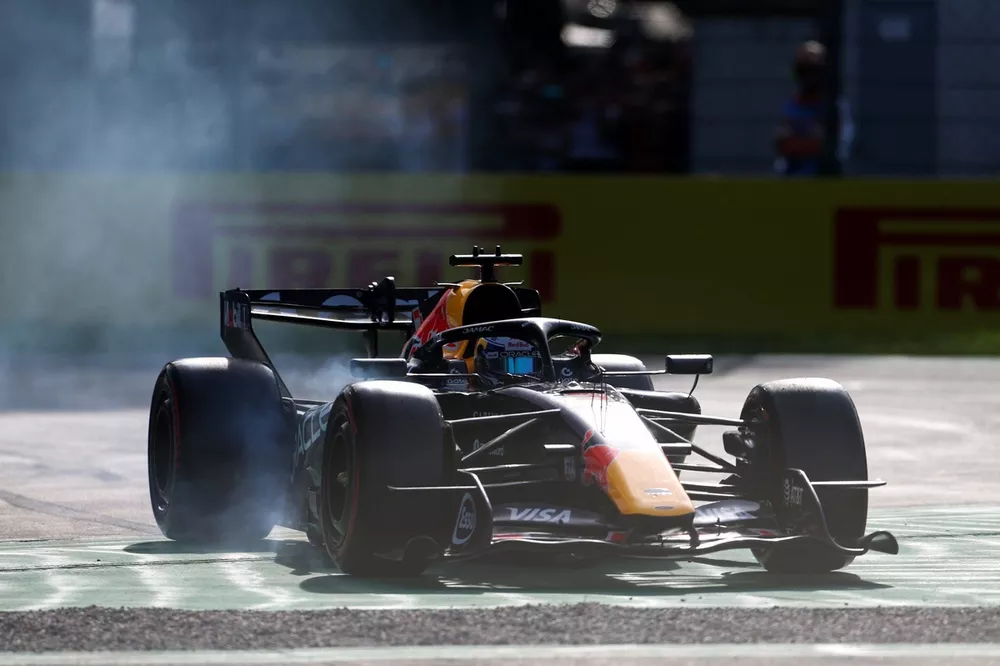


The ongoing struggle with car degradation highlights the intricate balance between performance and reliability in Formula 1. Red Bull’s transparent acknowledgment of this challenge, coupled with their long-term strategic planning, underscores the relentless pursuit of perfection in top-tier motorsport. While immediate solutions remain elusive, the commitment to resolving these issues for future seasons demonstrates a methodical and determined approach to maintaining their competitive edge. It also reminds us that even the most dominant teams face complex engineering hurdles that require patience and sustained effort to overcome. The ultimate goal is to provide Max Verstappen with a car that performs optimally from start to finish, ensuring he can consistently contend for victories.