
A home can be generally tidy and still feel like a second job. Nothing is dramatically messy, yet the same small tasks keep reappearing: keys on the counter, mail spreading across the table, a jacket on the back of a chair. The problem is rarely a lack of effort. It is that the home has no easy answer for the things that arrive in it every day, so every item becomes a small decision, and every decision costs a little energy.
The changes that help most are not big organizing projects. They are small adjustments that remove friction from ordinary routines. A landing spot for keys, a bin where clutter collects, fewer items on surfaces, and a short evening tidy can each make a home feel calmer without requiring a new personality or a free weekend.
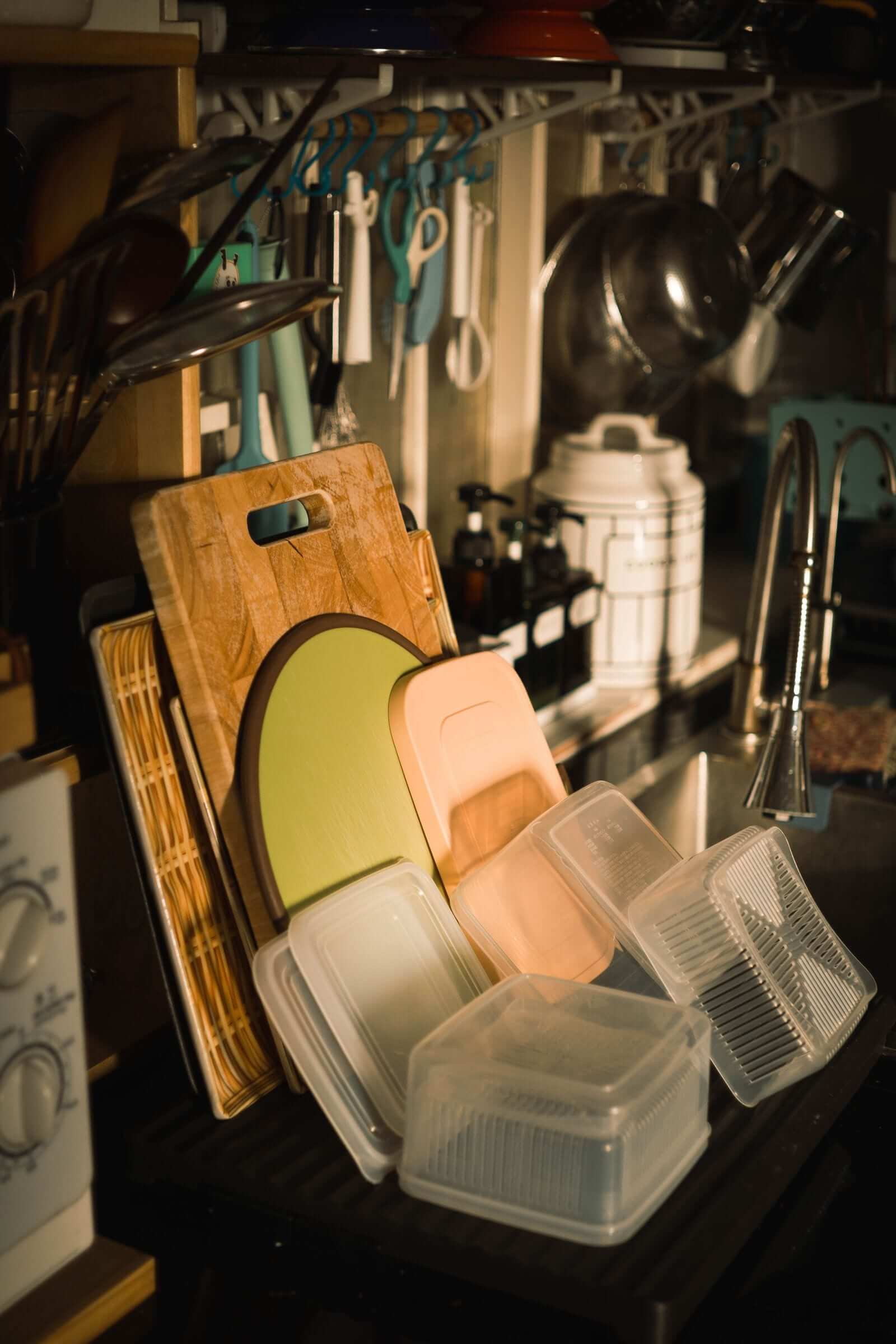
Give arriving things a place to land
Most household clutter begins at the door. Keys, wallets, sunglasses, and mail come in together, and if there is no obvious place for them, they settle wherever a hand first lets go. The counter becomes a temporary holding area that never quite empties.
A landing spot fixes this with almost no effort. It can be a small tray, a hook, or a single drawer near the entrance. The important part is that it is consistent: one place for keys, one place for outgoing mail, one place for the bag that gets used daily. When the destination is obvious, putting something away takes a second rather than a decision.
The same principle applies elsewhere. A hook by the closet door can hold the jacket that would otherwise land on a chair. A small basket beside the sofa can catch the book, remote, and glasses that accumulate there. These are not storage systems so much as simple answers to predictable questions.
Put a bin where clutter forms
Clutter tends to gather in the same few places: the kitchen counter, the coffee table, the bottom of the stairs, the edge of a desk. Instead of fighting the pattern, it helps to work with it. A small bin or basket in each of those spots gives loose items somewhere to go when tidying up, and it makes the tidy itself faster.
This is different from creating a junk drawer. The bin should be emptied or sorted regularly, and it should hold only what naturally collects there. A basket at the bottom of the stairs, for example, can carry items that belong upstairs; the next person heading up takes it along. A small bin on the kitchen counter can collect receipts, wrappers, and stray items before they spread.
The value is in lowering the effort of the first step. When clutter has a container, clearing a surface takes seconds. When it does not, the same task requires gathering things in your arms and finding a place for each one, which is exactly the kind of small friction that leads to postponing it.
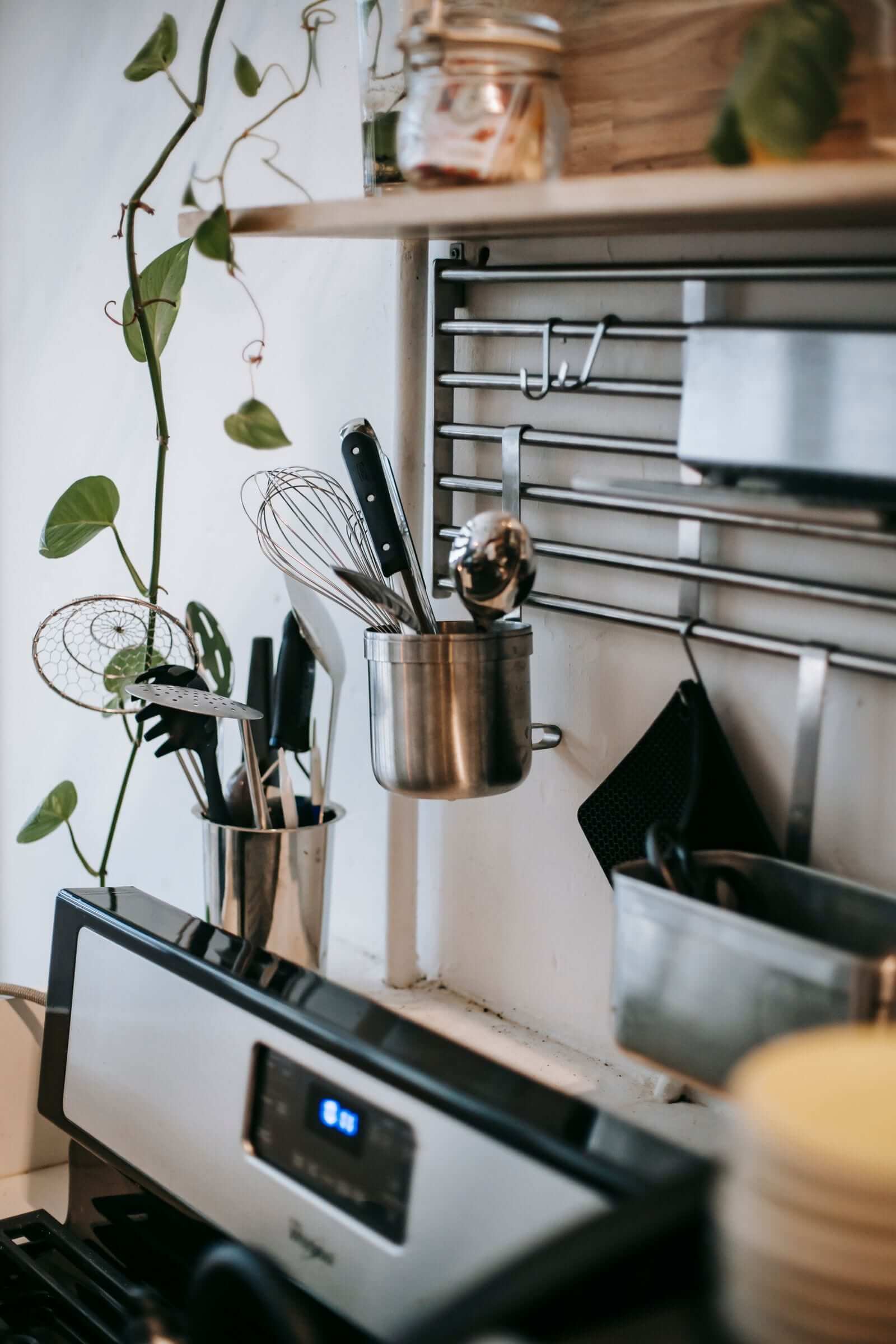
Keep fewer things on surfaces
Flat surfaces attract objects. A clear kitchen table invites mail, a clear desk invites papers, and a clear bathroom counter invites bottles. The more items already sitting on a surface, the more acceptable it feels to add one more.
Reducing what lives on surfaces is a small change with a large effect. It does not require minimalism or empty rooms. It means choosing what genuinely needs to stay out and putting the rest away. A single soap dispenser instead of five bottles, one small plant instead of a collection, a closed box instead of a pile of loose items.
Fewer surface items also make cleaning easier. Wiping a counter takes a moment when there is nothing to lift. Dusting a shelf is quicker when it holds three things rather than fifteen. The benefit compounds: surfaces stay clearer because they are easier to clear, and they are easier to clear because they stay clearer.
Use a five-minute evening tidy
Many homes feel like constant work because tidying happens in large, reluctant bursts. A better rhythm is a short daily reset. Five minutes in the evening, before settling down, is enough to return the day's loose items to their places, clear the main surfaces, and set up the next morning.
The five-minute limit matters. It keeps the task small enough to actually do, and it forces a focus on the most visible areas rather than a full reorganization. The goal is not a perfect house. It is a home that starts the next day slightly ahead instead of slightly behind.
A simple routine works best: carry stray items to their rooms, clear the kitchen counter, and put away whatever has landed on the table or sofa. If something does not have a place, that is useful information. It points to the next small change worth making.
Make the maintenance fit the home
These changes work because they are modest. A landing spot, a bin where clutter forms, fewer surface items, and a short evening tidy do not require a new schedule or a large investment. They reduce the number of small decisions a home demands each day, and they make the remaining ones easier.
The point is not to achieve a showroom. It is to stop the ordinary business of living from turning into constant work. Start with one change, the one that addresses the most repeated annoyance, and let it become automatic before adding another. A home that is slightly easier to maintain is a home that feels noticeably calmer to live in.